
Culvert Installation & Replacement
CULVERT INSTALLATION & REPLACEMENT IN PILOT MOUNTAIN, NC
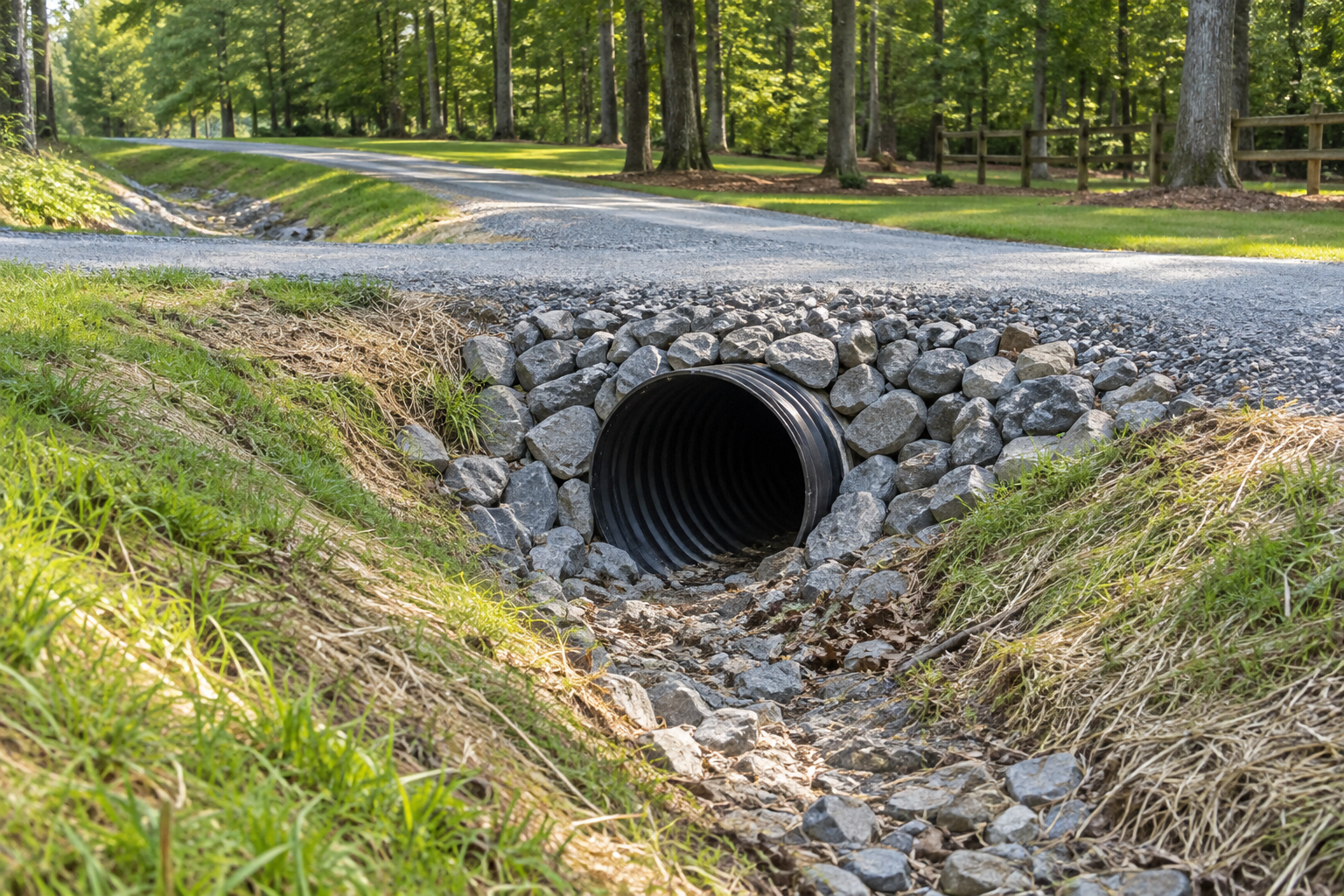
Corrugated plastic culvert pipe between 4 and 48 inches in diameter needs at least 12 inches of cover over its crown to carry vehicle traffic, according to manufacturer guidance built on AASHTO load standards, which is why burial depth matters as much as pipe diameter. Northwest Land & Timber handles culvert installation and replacement in Pilot Mountain, NC, setting pipe where driveways and access roads cross ditches or small streams and replacing crossings that have collapsed, rusted through, clogged solid, or washed out. We carefully size, bed, and backfill each culvert for rural property owners throughout Surry County and the wider NC Triad.
A SMALL PIPE PROTECTS A BIG INVESTMENT.
Culverts are easy to forget until one fails. A pipe that is too small backs water up over the drive, a pipe set too shallow cracks under a loaded truck, and a pipe without proper bedding lets water tunnel around it until the road above collapses. Any of those can cut off access to your home in a single storm.
We install crossings built to carry both the water below and the traffic above.
✓ New culverts for driveways and access roads
✓ Crushed and rusted pipe replaced
✓ Bedding and cover built to carry traffic
✓ Inlet and outlet ends protected from erosion
CULVERT INSTALLATION & REPLACEMENT
DRAINAGE THAT PASSES UNDER, NOT OVER, YOUR DRIVE.
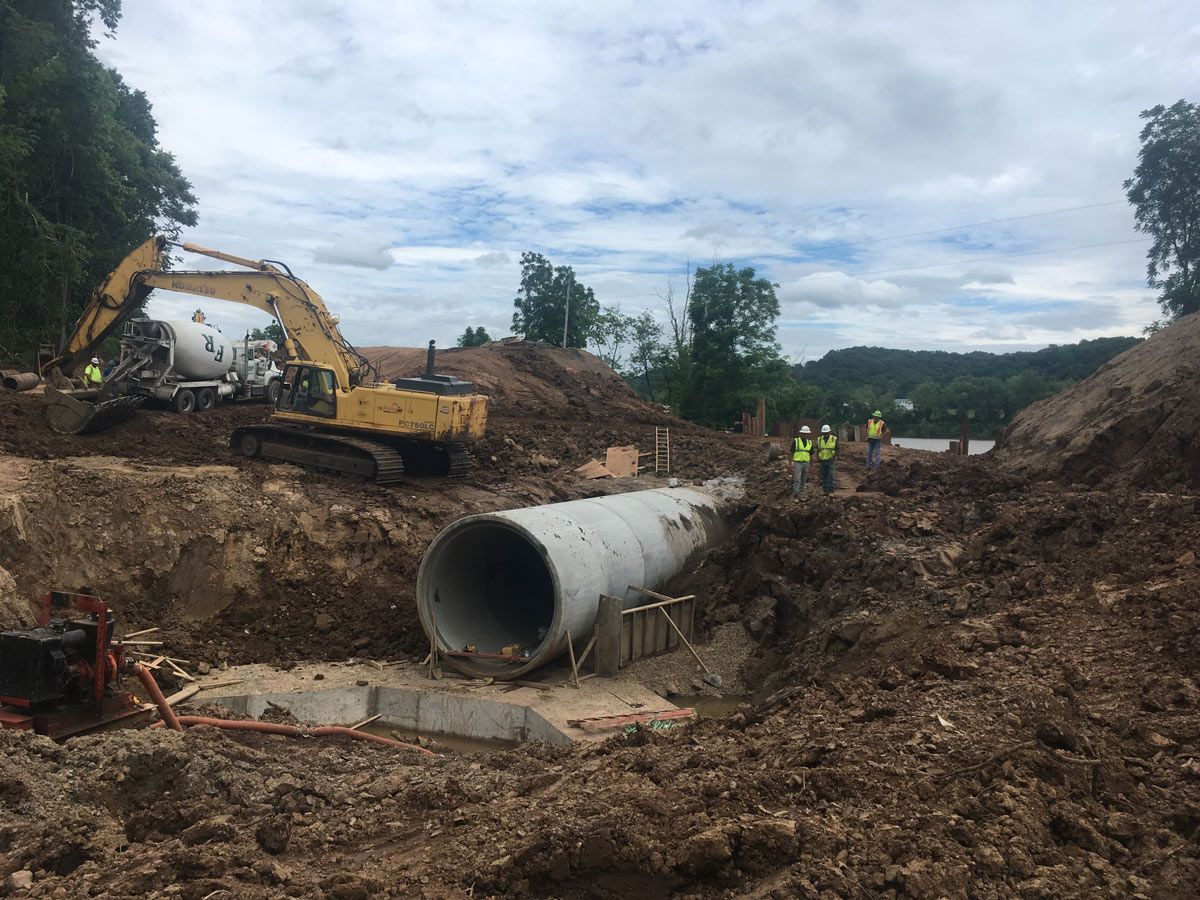
Every crossing starts with the water. We look at the size of the ditch or stream channel, how much land drains toward it, and what happens during heavy storms. That tells us the pipe size and length the crossing needs. From there, the trench is cut to grade, the pipe is set on firm bedding, and backfill is compacted in layers so the road above stays solid.
SUMMER STORMS PUT CROSSINGS TO THE TEST.
Summer thunderstorms and long spring rains send fast water off the slopes around Pilot Mountain, and small ditches can carry far more flow than their dry-season look suggests. Crossings on rural drives here need pipes sized for those surges and outlets armored so the water leaving the pipe does not undercut the bank.
A CRUSHED PIPE TELLS US EXACTLY WHAT WENT WRONG.
Since 2021, we have dug out failed culverts across this area, and each one explains its own failure: shallow cover, poor bedding, a pipe too short for the road width, or an inlet choked with debris. Those lessons shape how we install every new crossing. Is water already running over your drive when it rains?
WHY CHOOSE US FOR CULVERT INSTALLATION & REPLACEMENT.
Access That Stays Open
A properly sized culvert carries storm flow beneath the drive, so you are not stranded when heavy rain turns a roadside ditch into a fast-moving stream across your only way in or out.
A Road That Does Not Sink
Firm bedding and compacted backfill keep the surface above the pipe level. You avoid the dips, soft spots, and sudden collapses that form when water tunnels around a poorly installed crossing.
Less Bank Erosion
Protected inlets and outlets slow water where it enters and leaves the pipe. That keeps ditches and stream banks from scouring away and sending loose sediment downstream after every storm.
Longer Pipe Life
Correct cover depth and alignment reduce stress on the pipe wall. A culvert installed right can serve for many years without cracking, separating at the joints, or crushing under loaded trucks.
Problems Fixed at the Source
Replacement includes finding why the old pipe failed. Correcting the size, depth, or drainage behind that failure keeps the new crossing from repeating the same problem a few seasons later.
Driveway Work Included
Culvert work can be combined with driveway construction, regrading, or stone replacement. The whole crossing is finished in one project instead of leaving a new pipe under a damaged road surface.
our services
OUR CULVERT INSTALLATION AND REPLACEMENT WORK
Culvert projects vary from a single driveway pipe to several crossings along an access road. These are the services property owners call on us for most often.
DRIVE CROSSINGS
Driveway Culvert Installation
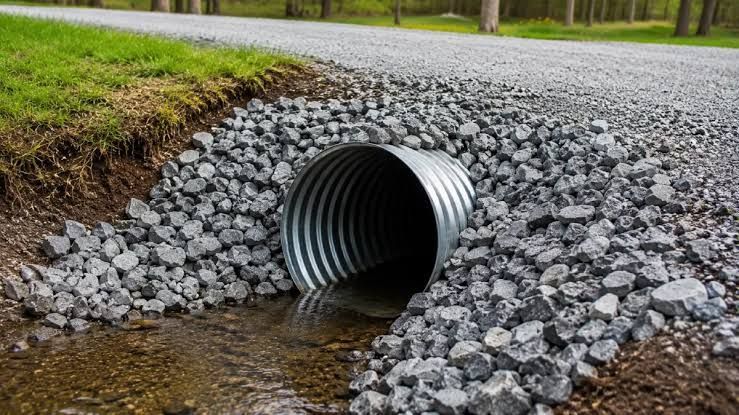
New pipes are placed where driveways cross roadside ditches or natural drainage paths. Each culvert is sized for the flow, set to grade, and covered deeply enough to support daily vehicle traffic without damage.
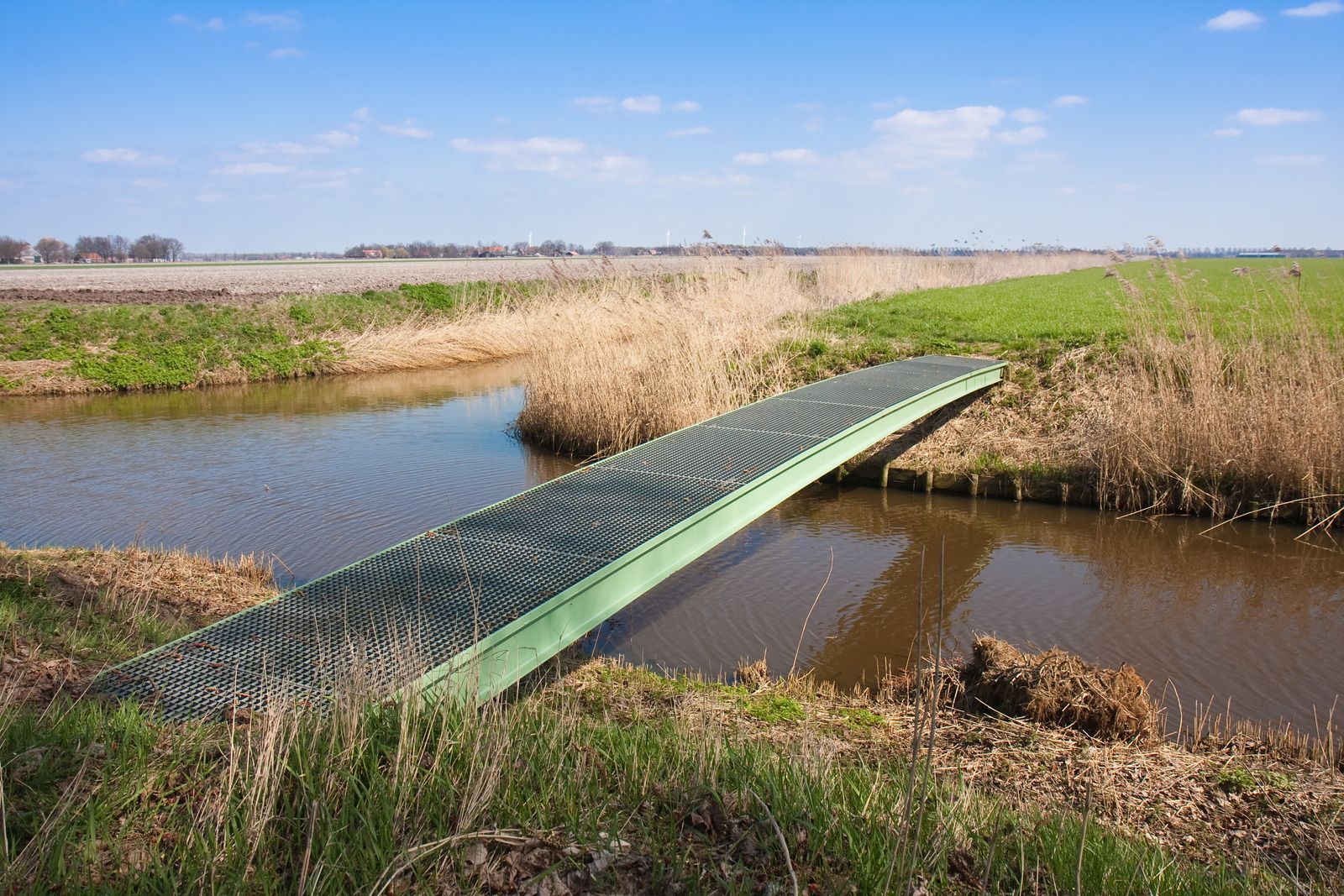
DITCH WORK
Ditch Crossings
Field ditches, roadside channels, and drainage swales are crossed with culverts that keep water moving freely. Proper alignment with the ditch prevents debris from catching at the inlet and backing up water.
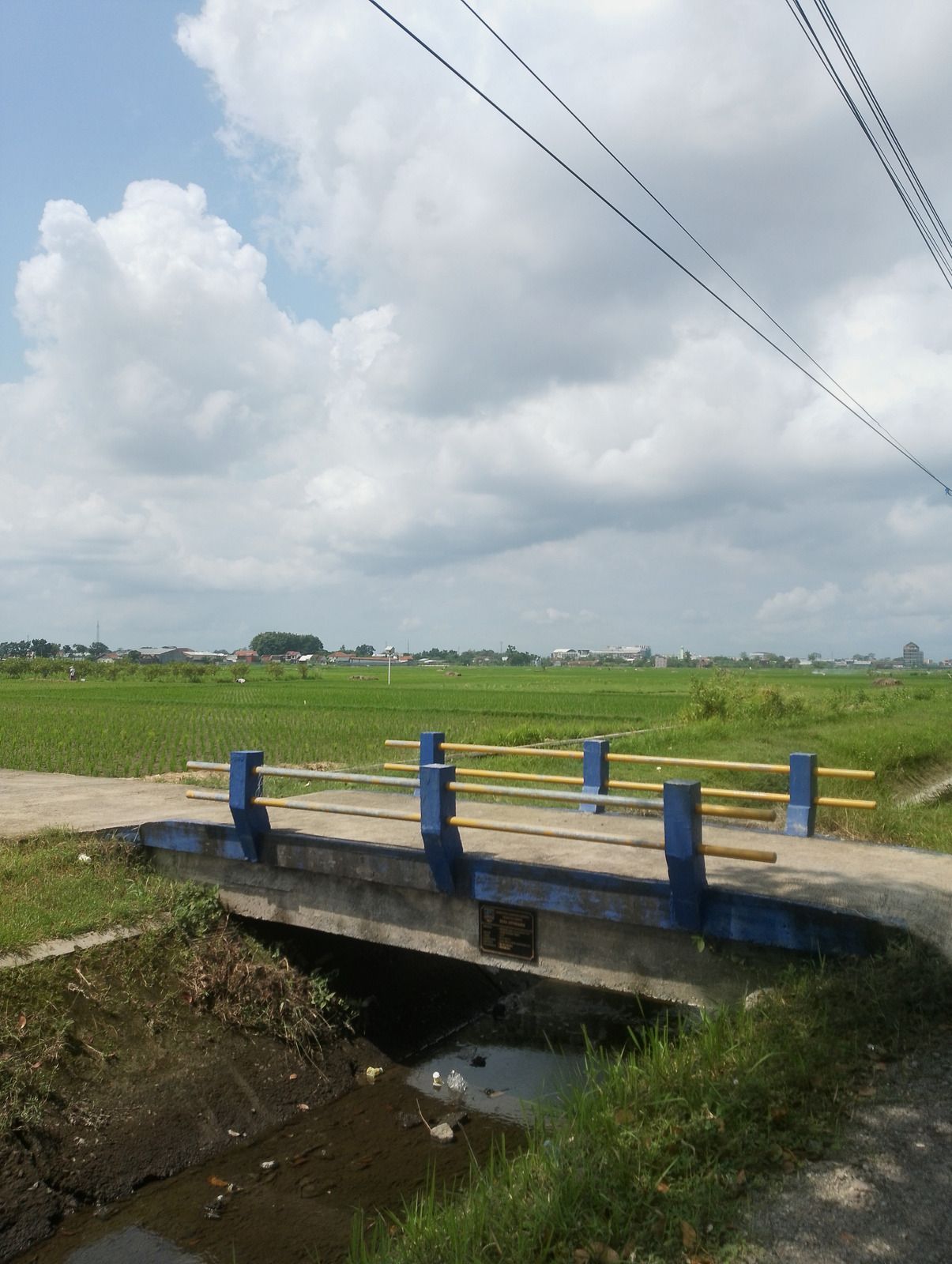
SMALL STREAMS
Small Stream Crossings
Access roads that cross small streams need pipes sized for storm flow and installed to limit disturbance to the channel. Banks are stabilized at both ends so sediment stays out of the water.
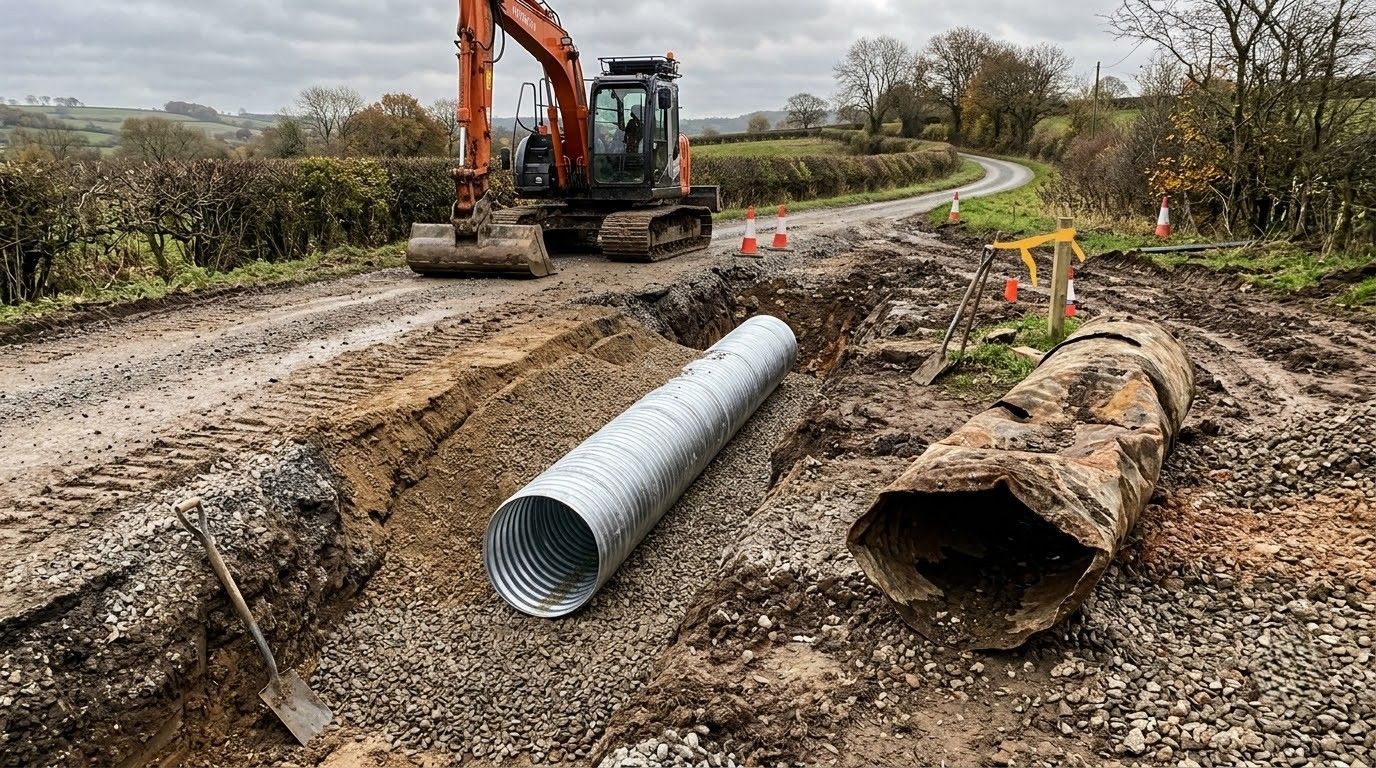
FAILED PIPES
Culvert Replacement
Crushed, rusted, separated, or undersized pipes are dug out and replaced. The trench is reshaped, new bedding is placed, and the replacement pipe is backfilled in layers to restore a stable road surface.
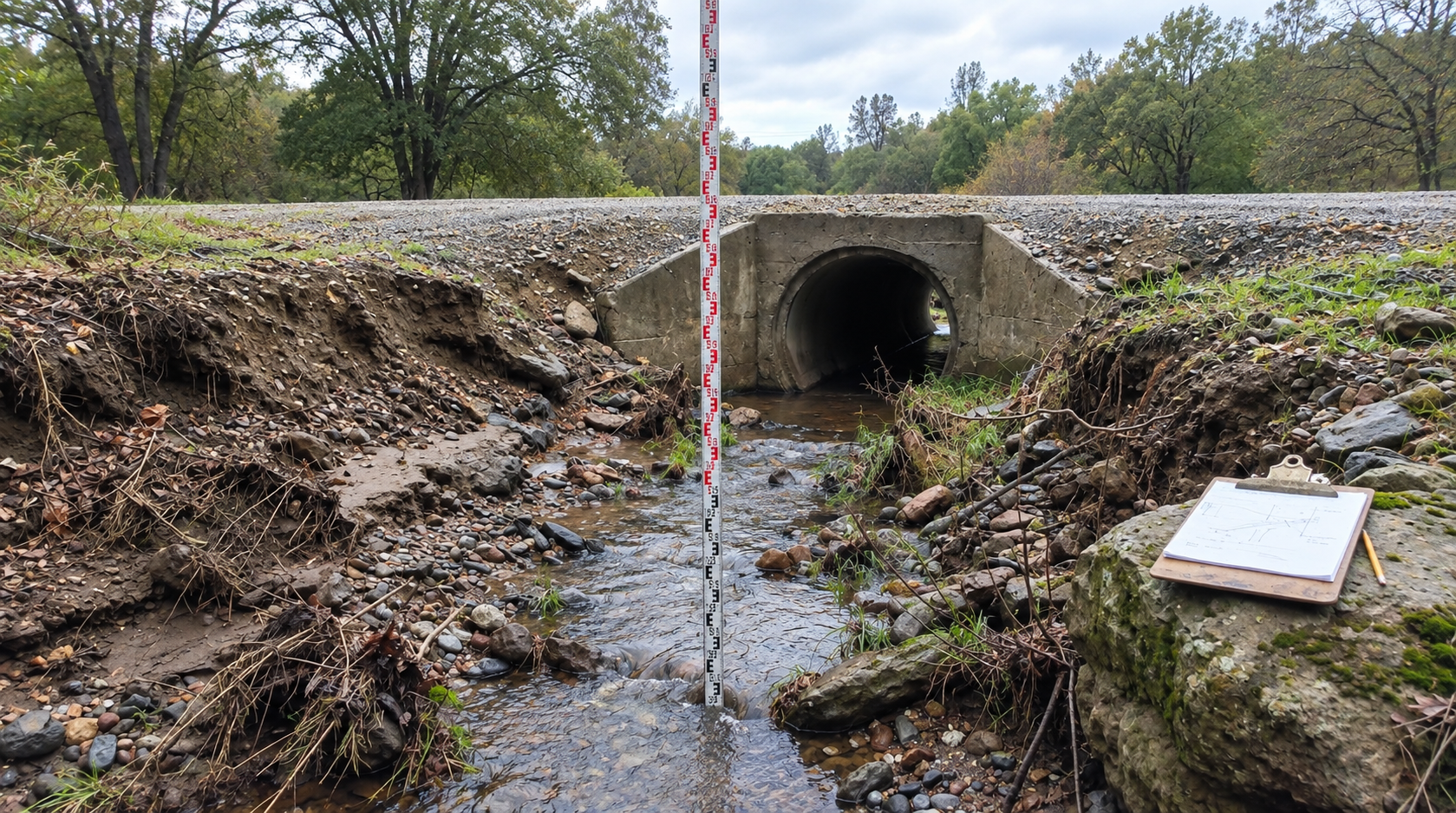
RIGHT SIZING
Crossing Evaluation and Sizing
Drainage area, channel dimensions, and signs of past overflow are reviewed to determine the pipe diameter and length a crossing needs, so the culvert handles heavy storms rather than only average rainfall.
WASHOUT FIXES
Culvert Washout Repair
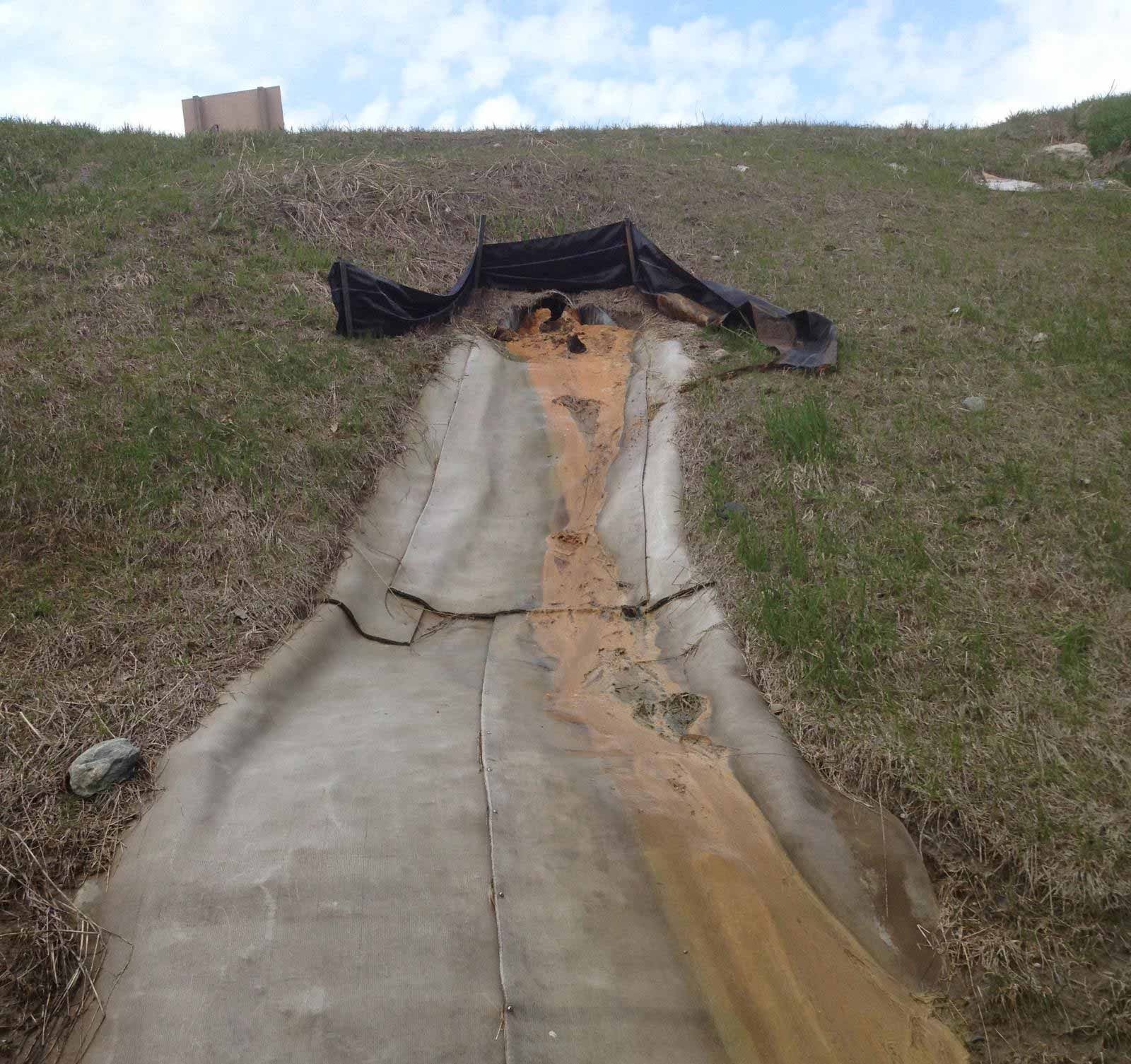
When water has cut around or over a pipe, the eroded road and banks are rebuilt. Fill is compacted, outlets are armored, and the crossing is restored so it holds up through future storms.
THE WORD ON OUR WORK
WHAT OUR CLIENTS SAY.
Property owners usually tell us about the first big storm after the work was done. The water went under the drive instead of over it, the road stayed firm, and the ditch banks held. They also appreciate hearing exactly why the old pipe failed.
FAQs
FREQUENTLY ASKED QUESTIONS.
Culvert questions usually come up after a washout or while planning a new drive. These answers explain sizing, materials, and warning signs so you know what to expect from a crossing on your property.
What size culvert pipe do I need for my driveway?
Pipe size depends on how much water reaches the crossing during heavy storms, which comes from the drainage area, slope, and ground cover. Driveways connecting to NCDOT roads need at least a 15-inch pipe, and many rural crossings require larger.
How deep should a culvert be buried?
Most plastic culverts need at least 12 inches of compacted cover over the top of the pipe to carry vehicle traffic, and larger pipes may need more. The bottom should sit on firm bedding at the grade of the channel.
How long does a driveway culvert last?
Lifespan depends on the pipe material, surrounding soil, water chemistry, and installation quality. Galvanized steel can rust through at the bottom eventually, while plastic pipe resists corrosion but relies heavily on proper bedding and cover to avoid deforming over time.
What are the signs that a culvert needs replacing?
Watch for water flowing over the drive, sinkholes or dips above the pipe, rusted-out bottoms, crushed ends, and erosion around the inlet or outlet. Northwest Land & Timber inspects these warning signs on Pilot Mountain, NC, properties before recommending any replacement.
Is plastic or metal culvert pipe better?
Corrugated plastic pipe is lightweight, resists rust, and works well for most residential crossings. Corrugated metal pipe offers added strength with shallower cover in some cases but can corrode over time, so site conditions usually decide which material fits best.
Why does water run over my driveway instead of through the culvert?
The pipe may be too small, partly blocked with sediment or debris, set at the wrong grade, or crushed inside. Clearing the inlet sometimes helps, but recurring overflow usually means the whole crossing needs to be resized or properly reinstalled.
Can I still reach my home during a culvert replacement?
Usually, yes. Most single driveway culvert replacements are fully completed within one working day, and Northwest Land & Timber plans work around Pilot Mountain, NC, weather while keeping an alternate route in mind whenever your only entrance crosses that same pipe.
Why do some driveway culverts fail so early?
Early failures usually trace back to installation shortcuts: an undersized pipe, overly shallow cover, loose bedding, or unprotected ends. Each lets water or traffic stress the crossing, so asking how those details will be handled is well worth the time.
HOW WE WORK
FROM FAILING CROSSING TO FREE-FLOWING WATER, HERE IS HOW.
STEP 01
Inspect the Crossing Site
We look at the ditch or stream, the existing pipe if there is one, and the surrounding terrain. Signs of overflow, erosion, and settling tell us how the crossing has been performing during storms.
STEP 02
Size the New Pipe
Drainage area, channel width, and flow patterns guide the pipe diameter and length. Where a drive meets a state road, the pipe must also meet the minimum size required for the connection.
STEP 03
Excavate and Remove Old Pipe
The trench is opened and any failed culvert is dug out. Underground utilities are located through NC811 first, and the channel is protected to limit sediment moving downstream while the work is underway.
STEP 04
Set the Pipe on Firm Bedding
A stable base is prepared at the proper grade, and the new pipe is placed and aligned with the channel. Correct slope keeps water moving and helps prevent sediment from settling inside the pipe.
STEP 05
Backfill and Compact in Layers
Fill is placed around and over the pipe in lifts and compacted thoroughly. Adequate cover is built up above the crown so the finished crossing can carry vehicles without crushing or shifting.
STEP 06
Protect the Ends and Restore the Road
Inlet and outlet areas are armored against erosion, the road surface is regraded and restoned, and we review the finished crossing with you so you know how to keep the inlet clear.